
If infrastructure and investment create the opportunity, policy determines whether Canada can act on it.
Last fall, Ottawa and Alberta signed an agreement that linked a new west coast pipeline to a carbon capture storage project and a shared approach to carbon pricing. On May 15, Prime Minister Carney and Premier Smith announced that deal.
The terms mean Alberta’s industrial carbon price will rise on a set schedule, reaching $130 per tonne by 2040. For companies deciding whether to commit billions to a long-term energy project, pricing certainty is what this deal delivers. Knowing what carbon will cost over the life of a project is what makes an investment decision possible. And the benefits to Canadians when major projects move forward include construction jobs, permanent operations roles, and tax revenue that funds public services..
Energy demand is a related challenge. A Macdonald-Laurier Institute report warns that Canada recently became a net electricity importer from the United States, meaning the country now buys more power than it sells. Demand is rising across the country, driven by population growth, electrification, and AI data centres, while investment in new generation has not kept pace. For a country with Canada’s energy resources, that is a problem worth paying attention to.
Last week the federal government announced a national electricity strategy aimed at doubling the size of Canada’s grid by 2050. Natural gas is central to the plan because it’s essential to keeping the grid stable and meeting demand reliably. It also commits to adjusting electricity regulations that would give provinces more control, with the goal of lowering costs for as many as 70 per cent of Canadians.
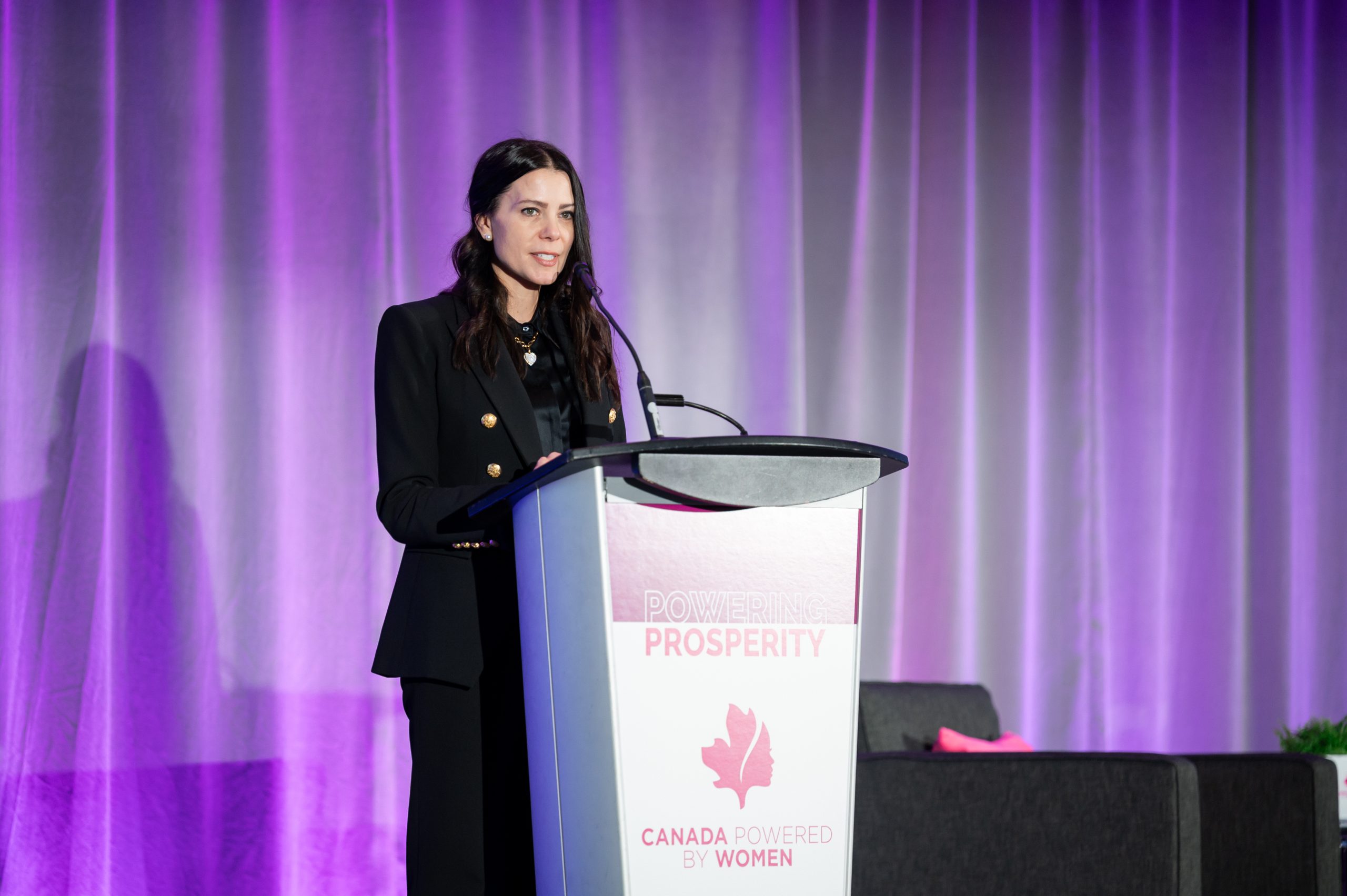
“The case for energy has been made and Canada needs to move faster than global competition because that’s the pressure right now,” said Jaimie Harding, Vice-President of Communications at TC Energy, at CPW’s Toronto Summit. “We need to create certainty, we need speed, and we need to own it.”
These are the decisions that will shape how strong Canada’s hand actually is when it counts.
The news over the last month offers encouraging signs of progress toward responsible resource development and long-term prosperity. These are complex announcements with significant details still being worked through, and CPW is watching closely before drawing firm conclusions. We’ll be unpacking the implications in future Perspectives newsletters, and we’ll share our submission on the regulatory consultation on our website so engaged women can see what we’ve put forward on their behalf.
Several significant developments are underway that will shape how strong that hand actually is. Click to learn more as we unpack news from this month: