

Photo: Daniel Pereira, courtesy of the Office of the Prime Minister of Canada
Every summer has its soundtrack. The beach gets a song, the patio gets a cold drink, and Canadian energy got a phrase we heard everywhere this season: energy sovereignty.
It’s coming up constantly because almost every major energy announcement of the past month, from new pipelines to deals meant to connect the country, is really about the same thing: Canada building the ability to control its own energy future.
So what does it mean? In the traditional sense, sovereignty is about self-sufficiency, being able to stand on our own.
For a country holding some of the largest energy reserves on earth, with the necessary pipelines and terminals to move that energy where it is needed, standing on our own is the least of what is possible. Setting the bar there leaves most of the opportunity unused: the deals, the jobs, and the ability to sell to the world on our own terms.
Real energy sovereignty is having choices, the ability to produce what we need, secure our own supply, and choose who we sell to and on what terms.
For engaged Canadian women following the headlines, the practical question is what that delivers at home, in the price of power, the security of a job, and the cost of filling the car and heating the house through winter.
Prime Minister Mark Carney made his own case for it in a video posted before Canada Day: “When we control our own energy, we control our future.”
He was equally clear that as much of that energy as possible should come from Canada, “produced responsibly and with a clear focus of lowering emissions over time.”
Then came the week that turned the idea into activity, with two federal announcements in two provinces and a multibillion-dollar private investment all pointing the same way.
The pipeline west
Carney and Alberta Premier Danielle Smith unveiled a proposed West Coast oil pipeline that would carry more than one million barrels of Canadian oil a day to Asian markets, following the existing Trans Mountain corridor from Bruderheim, northeast of Edmonton, to the southern British Columbia coast.
Alberta submitted the proposal to the federal Major Projects Office, the office that reviews projects the government designates as nationally significant, ahead of a July 1 deadline set in its energy agreement with Ottawa. Canada and Alberta would be equal partners, with an equity stake reserved for Indigenous Peoples and Calgary-based Pembina Pipeline joining as a private investor.
For a country whose oil has effectively had one major buyer, a second route to Asian markets would give Canada more customers and more say over the price it earns.
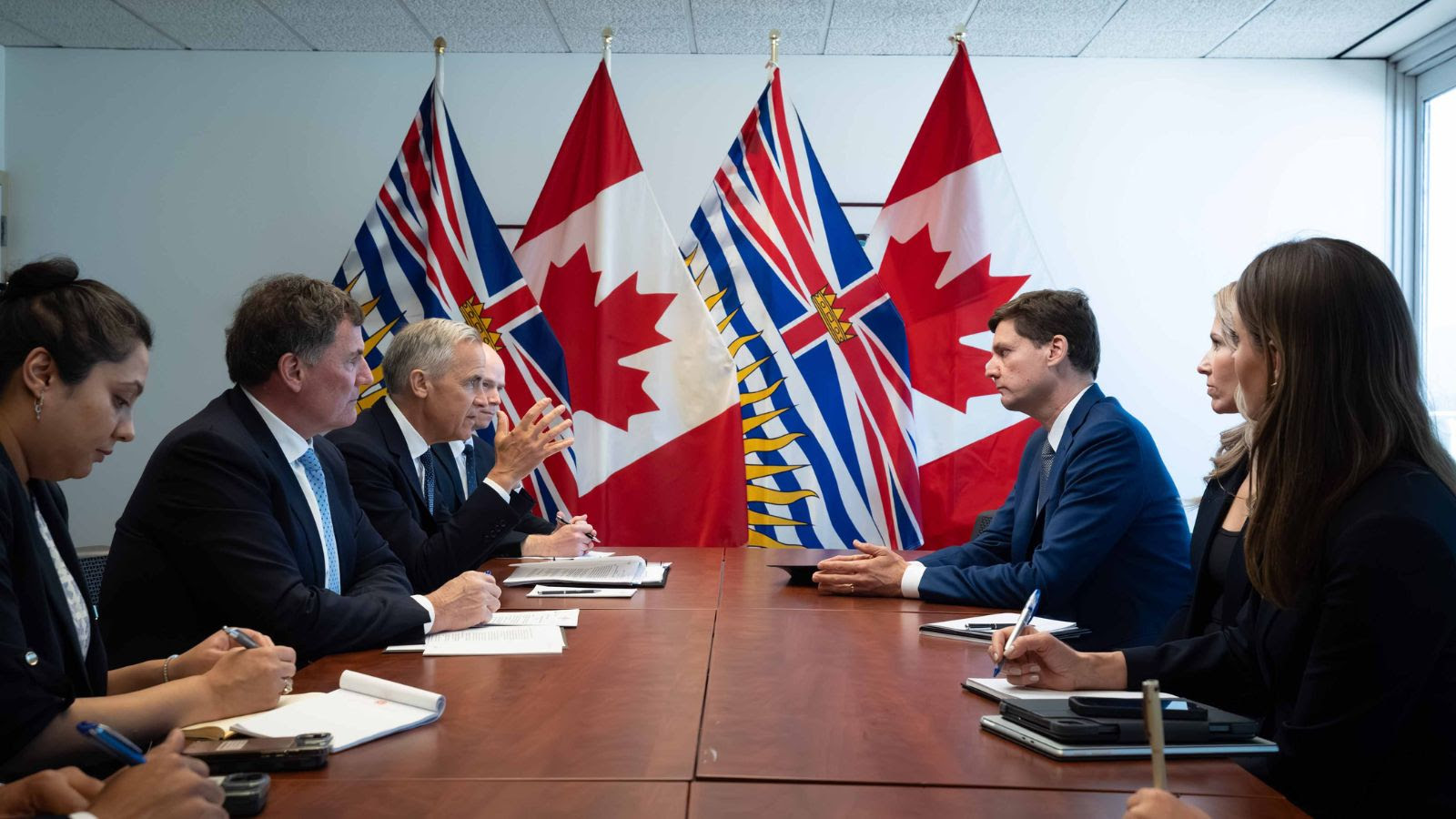
Photo: Daniel Pereira, courtesy of the Office of the Prime Minister of Canada
The deal in Vancouver
The prime minister and British Columbia Premier David Eby also signed the Canada-British Columbia Cooperative Prosperity Agreement, a package that pairs energy infrastructure with the things families feel directly.
It funds the North Coast Transmission Line, the George Massey Tunnel replacement, four liquefied natural gas (LNG) projects, more than $630 million for affordable childcare, and training for up to 100,000 new Red Seal trades workers, the national standard for skilled trades, across the country.
The ban on tankers off British Columbia’s northern coast stays in place, and Eby said the province would not challenge the pipeline in court, calling it a matter of federal responsibility.
The private investment
Pembina Pipeline, Morgan Stanley Infrastructure Partners and Kineticor Asset Management gave the go-ahead to a $4.6-billion natural gas plant in Sturgeon County, north of Edmonton that will supply a new artificial intelligence data centre.
Called the Greenlight Electricity Centre, the 932-megawatt plant is expected to start up in the second half of 2030, with permits already in place to double its output. It follows from the Canada-Alberta agreement reached last November that tied together pipelines, data centres and carbon capture, and it shows private capital moving on the same corridor governments are backing.
What all this adds up to
New export capacity means new tax revenue and royalties, the money that funds hospitals, schools and the programs Canadians use every day, and new infrastructure and generation mean jobs, from the trades building the lines to the engineers running them.
This is what engaged women have been telling us they want.
In Canada Powered by Women’s most recent national research, three-quarters (77 per cent) of engaged women back expanding export infrastructure to reach new global markets.
The announcements are encouraging. What matters now is the follow-through, whether the timelines stay in place and the projects move from proposal to construction.
One of them already arrives with a major condition attached, which is where we turn next.
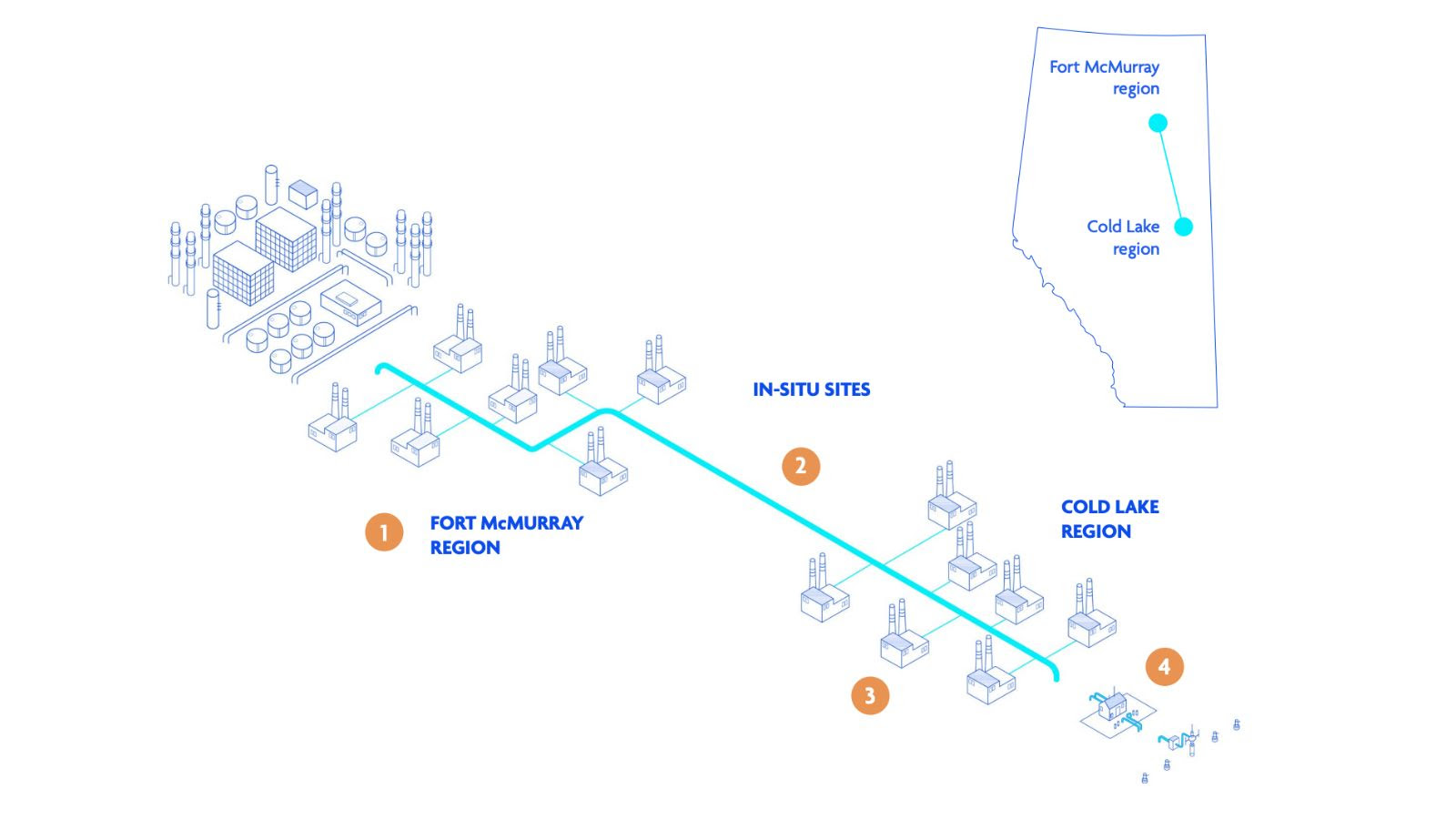
Image courtesy of the Oil Sands Alliance
Growing production and cutting emissions
The West Coast pipeline comes with a string attached, and the string is one of the largest carbon capture projects in the world.
On July 13, Alberta, Ottawa and the five companies of the Oil Sands Alliance announced they agreed to advance the Pathways Project, a plan to capture carbon dioxide from oilsands sites in northern Alberta and store it permanently underground near Cold Lake. Under the agreement Alberta and Ottawa reached last November, there is no new pipeline without Pathways and no Pathways without the pipeline. Production grows, and the emissions that come with it are meant to fall alongside it.
First estimated at $16.5 billion, the project is now expected to cost between $20 billion and $30 billion, according to Cenovus chief executive Jon McKenzie. To help make it viable, Ottawa extended its carbon capture tax credits by five years, to 2035, covering half the cost of eligible capture equipment.
This is the kind of progress engaged women have said they want to see.
In Canada Powered by Women’s 2025 national research, 82 per cent said supporting innovation and technology to reduce emissions matters to strong energy policy. For oilsands workers and the communities built around them, it means a credible path to keep producing and hiring while meeting the expectations that come with selling to the world.
Binding agreements with each company are due by November 15, the next milestone to watch.